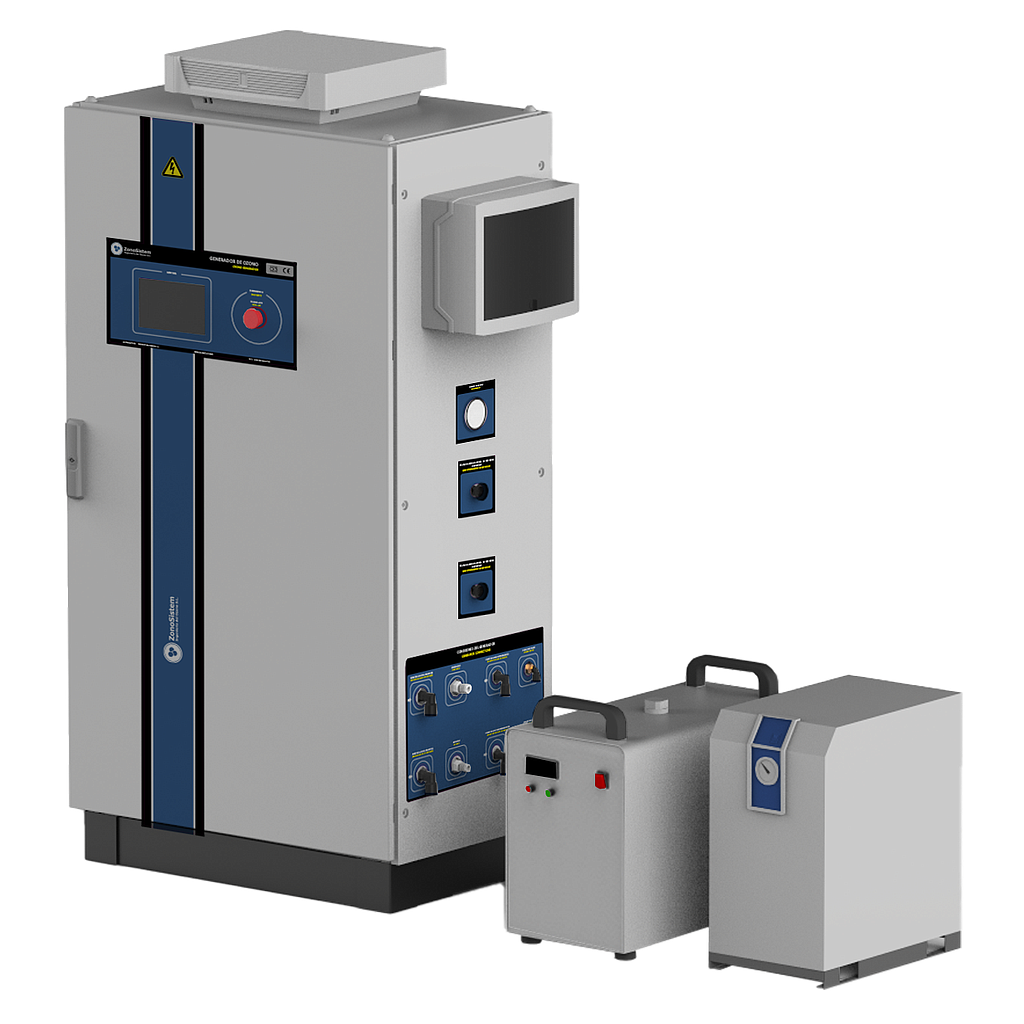
Ozone generator sizing and system design depend on the application, target performance, and site constraints.
If you share a few basics, we can recommend the right ozone generator capacity and the correct injection, contact and safety configuration.
+What size ozone generator do I need?
We size ozone generators from your flow or volume, target outcome (residual/CT/ORP), temperature, and water or air quality. In practice, the same “ozone generator” can be correct or completely wrong depending on dissolution efficiency, contact time, and the oxidation demand of your process.
- For water: flow (m³/h or L/min), target dissolved ozone (mg/L) or CT, and water quality.
- For air/odour: space volume, ventilation rate, humidity, and whether ozone is used in occupied or unoccupied areas.
- For industrial oxidation: contaminant type, desired conversion, and off-gas handling.
+Do I need an oxygen-fed ozone generator, or can I use dry air?
Oxygen-fed systems are usually preferred for stable output, higher ozone concentration, and continuous industrial duty. Dry air-fed ozone generators can suit lower output requirements and simpler applications, but will typically produce lower concentration ozone and may not be ideal for demanding water treatment or high duty cycles.
+Corona discharge vs electrolytic ozone generators: what is the difference?
Corona discharge is the most common technology for industrial ozone generation, especially where higher output is needed. Electrolytic ozone generators produce high-purity ozone directly from water, without a separate oxygen or air feed gas, and are often used where purity is critical or a compact, low off-gas approach is required.
+How is ozone injected into water?
Ozone is typically dissolved using a venturi injector, static mixer, and a sidestream recirculation loop, or via a contact tank system for longer contact time. The best approach depends on your flow, the required CT, and how you manage off-gas safely (destruct and venting).
+Do your systems include ozone analysers and control as standard?
Analysers are not “one-size-fits-all”, so they are typically specified as options. We can integrate gas or dissolved ozone measurement (and/or ORP) with closed-loop PLC control where it adds real value for performance and compliance.
+Is ozone safe, and what safety equipment is required?
Ozone must be treated as a strong oxidant and controlled properly. Safety design typically includes one or more of the following: ozone destruct for off-gas, ambient ozone monitoring, ventilation interlocks, emergency stop, and process interlocks (flow/pressure/door switches) depending on the application and whether areas are occupied.
+What materials are compatible with ozone?
Material selection depends on ozone concentration, temperature, and whether it is gas or dissolved ozone. As a general rule, PTFE/PFA and suitable grades of stainless steel are commonly used, while many elastomers and some plastics can degrade over time. We provide material compatibility guidance during specification.
+Can you supply complete ozone skids, not just the generator?
Yes. We supply engineered packages that can include oxygen generation (PSA or LOX interface), ozone generation, injection/dissolution, contact and off-gas destruct, sensors, and PLC/HMI control. This reduces integration risk and makes performance more predictable on site.
+Do you support projects outside the UK?
Yes. We provide UK-based engineering support with worldwide project delivery. Remote support, commissioning support, and documentation can be tailored depending on site location and local requirements.
+What information do you need to quote or size an ozone system?
The fastest way is to share: application goal, flow or volume, target performance (or the problem statement), temperature, and any key constraints (materials, footprint, power, controls). If some details are unknown, we can still guide you and close the gaps with a short call.