

It takes more than 800 litres of water to produce just one kilo of apples. For growers, that’s a major investment in resources, time and energy. Protecting this investment means ensuring water and fruit safety at every stage – from irrigation in the orchard to storage after harvest.
This is where ozone in apple production is making a difference.
Why Ozone in Apple Production Matters
Apples may look simple, but their production is resource-intensive. With climate change and growing water scarcity, growers are under pressure to:
Reuse water safely
Reduce pesticide residues
Extend shelf life without chemicals
Meet consumer demand for “natural” produce
Ozone provides a unique solution. Generated from water and electricity, it disinfects without residues, helping growers improve food safety and sustainability across the entire production chain.
Pre-Harvest Benefits of Ozone in Apple Orchards
Research shows that using ozone in apple orchards can suppress soil-borne diseases and support tree health:
In greenhouse trials, ozonated water at ~0.27 mg/L reduced nematode invasion of apple roots by around 60%, improving root and shoot growth.
Controlled ozone applications offer a way to reduce pathogen pressure in replant soils without chemical nematicides.
For growers, this means healthier trees and stronger yields, while reducing reliance on traditional soil treatments.
Foliar Sprays and Ozone in Apple Growing
Foliar sprays are standard in apple cultivation. Calcium is applied to prevent bitter pit, micronutrients like zinc and boron are added, and fungicides are used against apple scab (Venturia inaequalis).
Using ozone in apple production brings two advantages here:
Safe carrier water: Ozonated water ensures that foliar nutrients and crop protection agents are applied without introducing microbial risks.
Direct suppression: Research indicates that ozone foliar sprays can reduce the severity of scab and fungal diseases, especially within integrated pest management (IPM) programmes.
Unlike fungicides, ozone leaves no residues – giving growers both safety and marketing benefits.
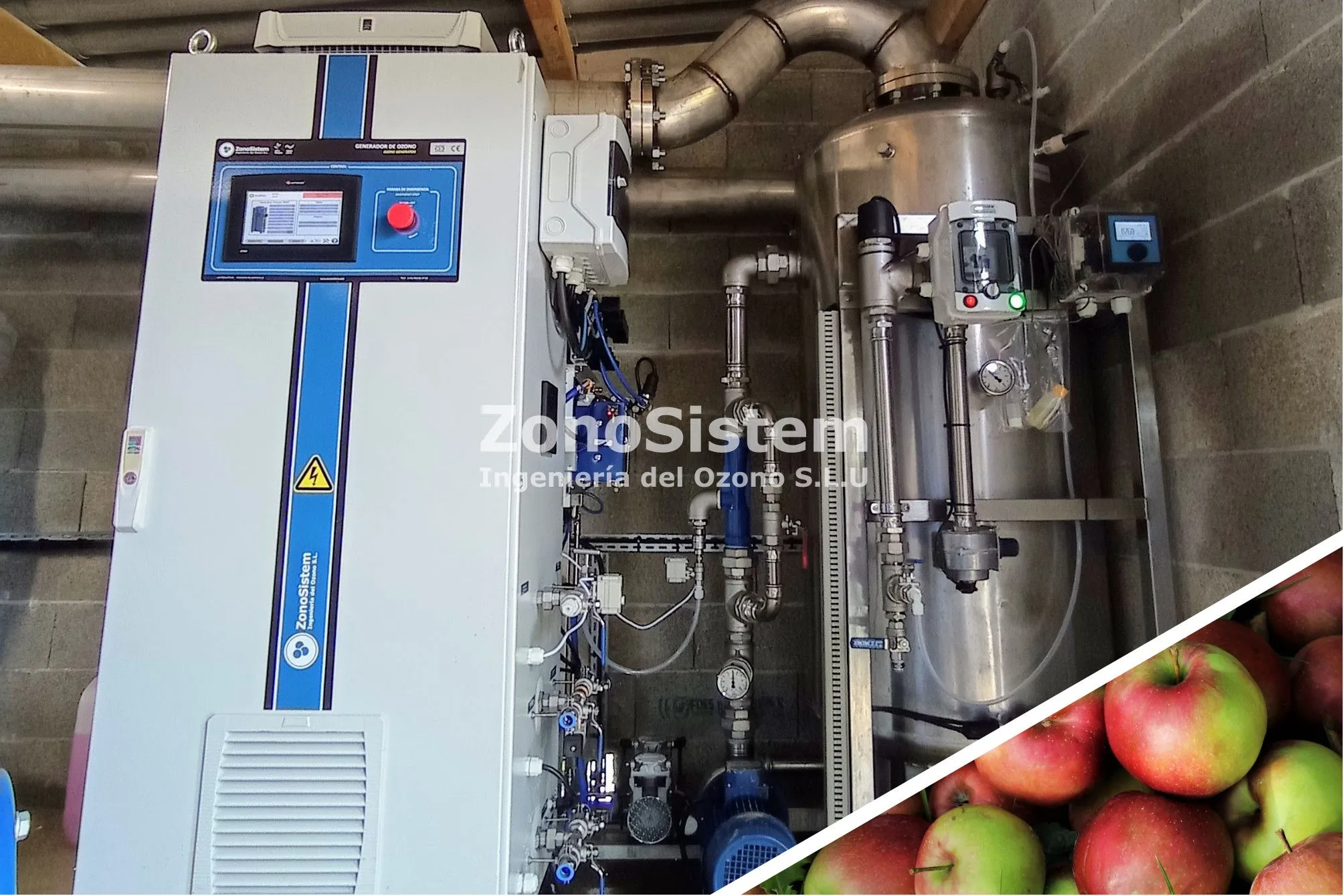
Post-Harvest Applications of Ozone in Apples
The risks do not end at harvest. Washing, storage and transport introduce their own challenges. Here, ozone in apple production has been widely studied:
Washing: Ozonated water reduces microbial loads by 1–2 log₁₀ without altering taste or aroma.
Cold storage: Continuous low-dose gaseous ozone achieved a 3 log₁₀ reduction in Listeria (≈99.9%) over 9 months, while maintaining firmness.
Decay control: In some cultivars, ozone eliminated decay during six months of storage, extending shelf life.
By integrating ozone, growers can limit moulds, reduce ethylene build-up, and extend freshness without chemical additives.
The Sustainability Advantage
When each kilo of apples requires 800 litres of water to grow, wasting or contaminating that investment is not an option. Ozone in apple production enables growers to:
Reuse water safely, reducing environmental impact
Lower chemical dependency
Deliver fruit that meets both retailer standards and consumer expectations for residue-free produce
From irrigation and foliar sprays to washing and cold storage, ozone in apple production offers growers a safe, practical and sustainable way to protect water, fruit and quality.
One kilo of apples may take 800 litres of water to grow. Ozone ensures every drop counts.
