
The ozone history began in 1785 when Dutch physicist Martinus Van Marum observed a peculiar odour during experiments with electrical discharges, although he didn’t fully understand its source. It wasn’t until 1840 that German chemist Christian Friedrich Schönbein identified this gas and named it “ozone,” derived from the Greek word “ozein,” meaning “to smell.”
Marius Paul Otto, a French scientist in the late 19th century, made significant strides in understanding and applying ozone. He pioneered its use in water treatment, demonstrating its effectiveness as a powerful disinfectant. Otto’s work was pivotal in transitioning ozone from a laboratory curiosity to a practical tool used in various industries, particularly in sanitation and environmental protection.
As the 20th century progressed, ozone’s applications expanded beyond water treatment to air purification, food processing, and even medical uses. Today, ozone remains a critical component in environmental technology, thanks to the foundational research of early scientists like Van Marum, Schönbein, and Otto, whose work continues to influence modern science and industry.
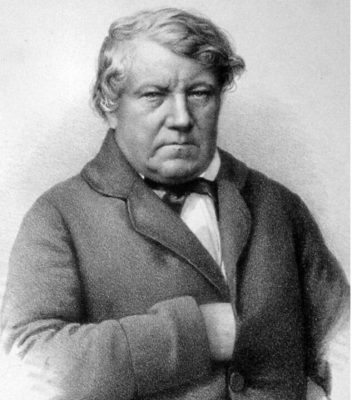
Christian Friedrich Schönbein (1799–1868)
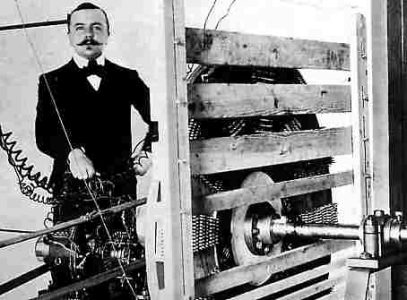
In 1893, the first large-scale ozone application was implemented in Oudshoorn, Netherlands. This installation sparked further interest and research, leading to the establishment of another significant ozone unit in Nice, France, in 1906. Nice became renowned as the birthplace of ozone for drinking water treatment.
Before World War I, the use of ozone installations grew across Europe, reaching 49 by 1916, with France leading in adoption. However, the rise of chlorine as a disinfectant caused a decline in ozone use. It wasn’t until after World War II that ozone regained popularity, with installations surpassing 2,000 by 1985.
Timetable for Ozone (1785 - Present)
1785: Martinus Van Marum observes ozone during electrical experiments.
1840: Christian Friedrich Schönbein identifies and names ozone.
1857: Werner von Siemens invents the first practical ozone generator.
1893: Marius Paul Otto pioneers ozone use in water disinfection.
1906: The first ozone water treatment plant is built in Nice, France.
1970s: Studies begin on the environmental effects of ozone.
1985: The Montreal Protocol is adopted to protect the ozone layer.
1990: EPA approves ozone for drinking water treatment.
1997: FDA approves ozone as an antimicrobial agent in food processing.
2001: OSHA issues guidelines on workplace ozone exposure limits.
2010: The EU recognizes ozone for organic food processing.
2014: The European Chemicals Agency (ECHA) approves ozone as a biocidal product under the Biocidal Products Regulation (BPR).
2021: WHO updates guidelines to further limit ozone exposure.
Present: Ozone continues to be essential in environmental protection, industrial sanitation, and water treatment, with ongoing advancements and broader applications.