

Introduction: The Future of HVAC Efficiency
Air Handling Units (AHUs) are essential for maintaining indoor air quality (IAQ) in commercial and industrial buildings. However, traditional filtration systems often create inefficiencies that increase operational costs and energy consumption.
HVAC Electrostatic Filtration (ESP) is a proven technology that enhances AHU performance, reduces maintenance needs, and delivers significant cost savings. Unlike mechanical filters that lose efficiency as they clog, ESP filters maintain consistent performance while using less energy.
This article explores how ESP systems improve AHU performance and why they are a smart investment for businesses.
How ESP Systems Enhance Air Handling Unit Performance
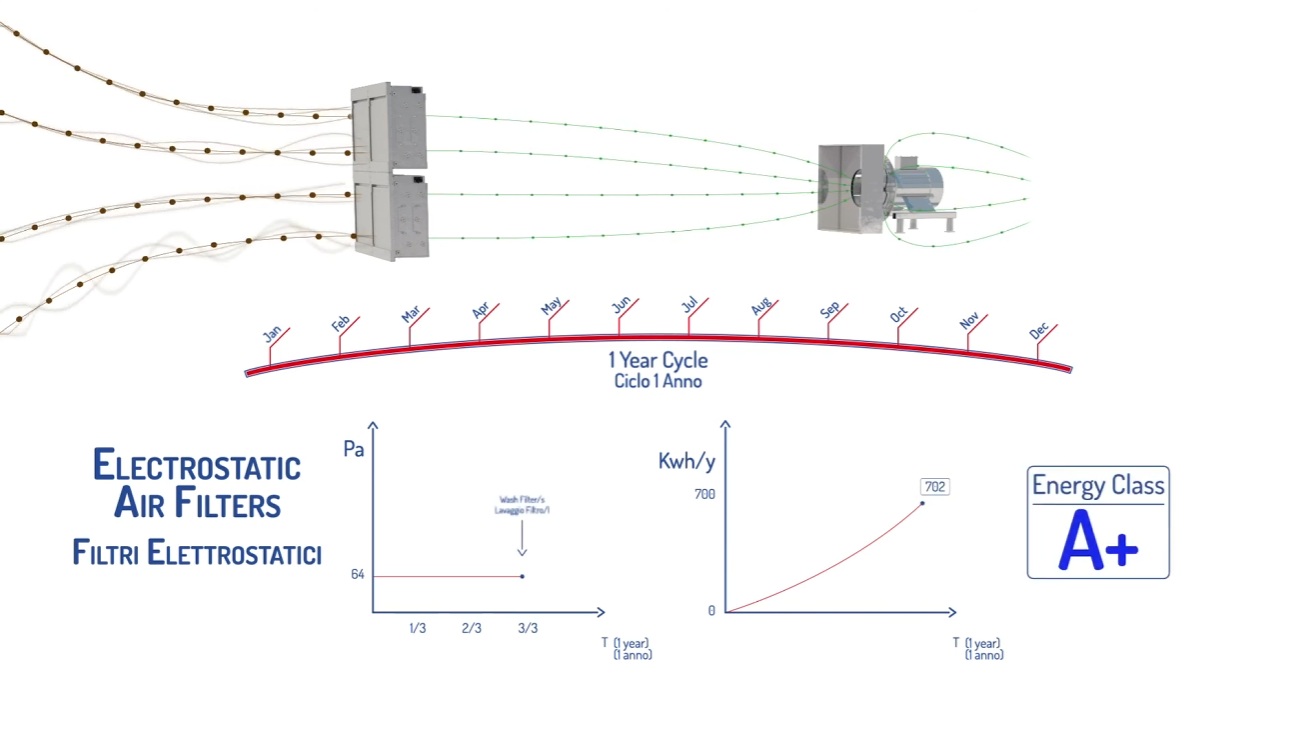
Lower Airflow Resistance and Increased Energy Efficiency
A major issue with traditional filters, such as HEPA or bag filters, is their high-pressure drop. As these filters collect dust and particles, they restrict airflow, forcing AHU fans to work harder and consume more energy.
Electrostatic filters, on the other hand, maintain a consistently low resistance. This leads to:
- Improved airflow distribution
- Reduced strain on HVAC components
- Up to 50% lower energy consumption
By lowering fan workload, ESP technology directly contributes to reduced electricity costs and more efficient AHU operation.
Extended Equipment Lifespan and Lower Maintenance Needs
Frequent filter replacements and system maintenance are costly and time-consuming. Traditional filters require regular changes, and accumulated dust can clog coils and ducts, leading to expensive repairs.
ESP filters are designed to be:
- Washable and reusable, lasting 15-20 years
- Less demanding on HVAC components, preventing coil and duct contamination
- Easier to maintain, requiring only periodic cleaning instead of frequent replacements
By protecting critical HVAC components, businesses can extend the lifespan of their AHUs and reduce downtime.
Better Indoor Air Quality and Regulatory Compliance
Ensuring high indoor air quality is crucial for businesses, especially in industries like healthcare, food production, and manufacturing. Poor air quality can lead to health risks, regulatory compliance issues, and reduced productivity.
ESP filters effectively capture and remove:
- Fine dust (PM1, PM2.5, PM10)
- Bacteria, viruses, and mold spores
- Smoke, fumes, and industrial pollutants
These systems comply with international air quality standards, including EN 1822, EN 779, UNI 11254, and UL 867, ensuring businesses meet health and safety regulations while maintaining a cleaner working environment.
Economic Benefits of ESP Filtration
Energy Cost Savings
Traditional filters create high resistance, which increases fan energy consumption. By reducing airflow resistance, ESP filters allow HVAC systems to operate more efficiently, cutting electricity costs significantly. Businesses that switch to ESP filtration often see:
- A 30-50% reduction in HVAC energy consumption
- Lower demand on fan motors, reducing electricity expenses
- More consistent system performance over time
Elimination of Frequent Filter Replacements
Mechanical filters require frequent replacements, adding to operational costs. ESP filters, however, are designed to last for decades with simple periodic washing. Over five years, businesses can eliminate thousands of dollars in filter replacement costs.
Lower Maintenance and Repair Expenses
ESP filters help keep AHU components clean, reducing the need for:
- Coil and duct cleaning
- Emergency maintenance due to clogged filters
- System downtime for filter changes
With fewer service interruptions and lower maintenance demands, businesses can maximize HVAC uptime and improve operational efficiency.
ESP vs. Traditional Filtration: A Cost Comparison
| Feature | Traditional Filters (HEPA, Bag) | ESP Electrostatic Filtration |
|---|---|---|
| Filtration Efficiency | High, but decreases over time | Consistently high (99.9%) |
| Energy Consumption | High (due to pressure drop) | Low (minimal airflow resistance) |
| Filter Lifespan | 3-6 months | 15-20 years (washable) |
| Maintenance Costs | High (labor + materials) | Low (simple cleaning) |
| Return on Investment | Long-term costs increase | Pays for itself in ~2 years |
| Environmental Impact | High waste (disposable filters) | Sustainable (no waste) |
Businesses that switch to ESP filtration not only reduce costs but also contribute to sustainability by eliminating disposable filter waste.
Who Benefits Most from ESP Filtration?
ESP filtration is ideal for industries where air quality and energy efficiency are critical. These include:
- Commercial buildings and offices – Better IAQ for employees and visitors
- Hospitals and healthcare facilities – Infection control and pathogen removal
- Factories and industrial plants – Reduction of dust, fumes, and pollutants
- Food processing and packaging – Compliance with hygiene regulations
- Airports and public transport – High-volume air purification
By integrating ESP filters into AHUs, businesses can ensure cleaner air, lower costs, and a more sustainable filtration solution.
Why Businesses Should Switch to ESP Filtration
Investing in ESP filtration is a strategic decision that offers long-term benefits. From reducing energy consumption to extending the lifespan of HVAC systems, these filters provide a cost-effective and environmentally friendly alternative to traditional filtration methods.
For businesses looking to optimize AHU performance, ESP technology delivers measurable efficiency gains, lower operating costs, and improved air quality.
Ready to explore how ESP filtration can benefit your business? Contact us today for a consultation.
