

Ozone Nanobubble Water Treatment
What are Nanobubbles?
Nanobubbles are defined as extremely small substances invisible to the naked eye, about 2,500 times smaller than a single grain of table salt. Nanobubbles are between 70 nanometers and 120 nanometers in size... Since they are suspended in water for a long time, they act like a battery that continuously delivers oxygen to the entire body of water. Because of their size, nanobubbles exhibit unique properties that improve countless physical, chemical and biological processes. These generators regulate and increase oxygen (ozone) levels in water supplies. As oxygen is consumed, the nanobubbles release more oxygen into the solution, maintaining the dissolved oxygen level.
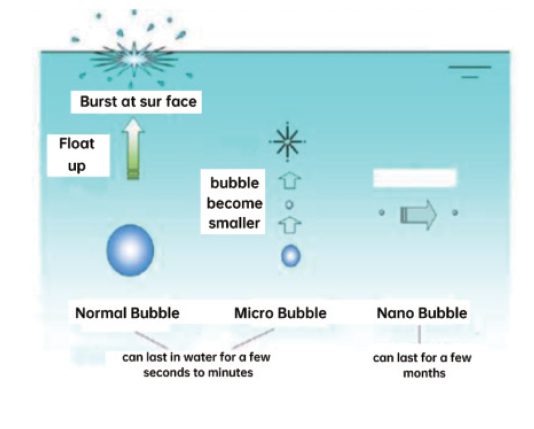
Bubbles that are less than 200nm and stay in the water for a long time. Micro-organism can be activated due to the oxygen inside these bubbles.
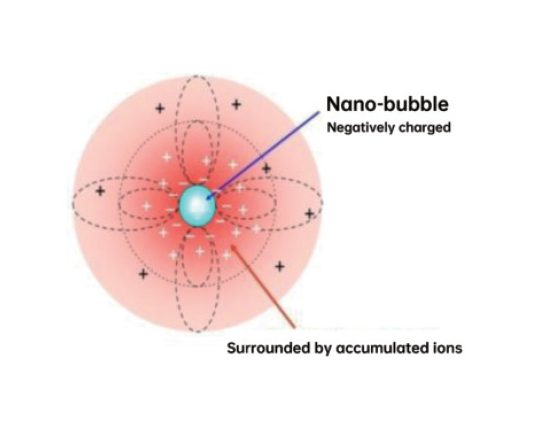
Nanobubble has a negative charge that can attract positive molecules and repels each other thus keeping themselves evenly distributed in the water.
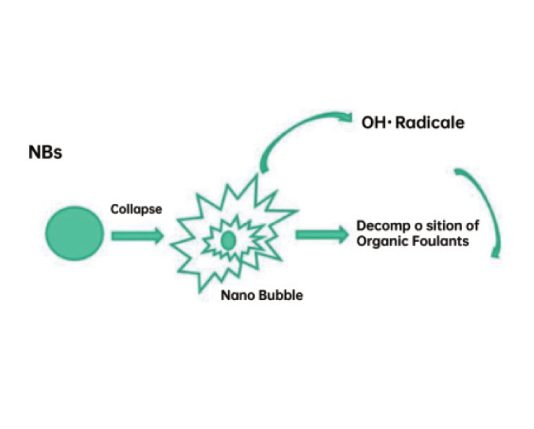
When it collapses, it produces OH Radicals and decomposes the organic foulants
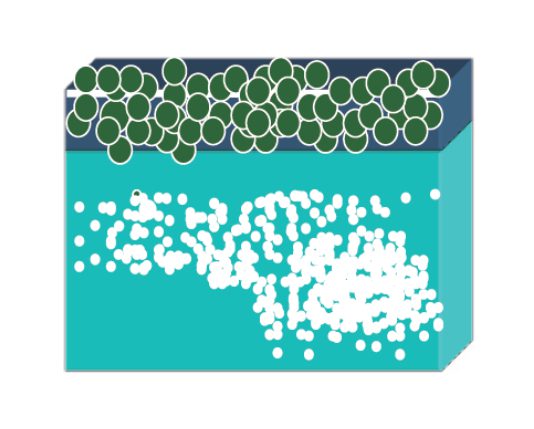
Any S.S, algae, dust, nitrogen, phosphorous, organic matter will be caught by flocculent of the charged aggregate instantly.
Nanobubble Properties
The method of generating nanobubbles has a mean diameter of less than 200nm. Bubbles of this size are negatively charged and remain in the water for a long period of time. It does not burst and its movement is subjected to Brownian motion. They remain stable in water for a long time because of their negatively charged surface (zeta potential).
The surface area of a nanobubble is considerably large, and with super gas dissolving capacity, the concentration of dissolved oxygen carried by nanobubbles can reach saturation concentration. (6 times more effective in Oxygen transfer compared to Aeration )

What can Nanobubbles do?
Nanobubbles provide high concentrations of reactive oxidants to participate in oxidative degradation reactions and reduce the BOD, COD, ammonia, nitrate and faecal coliform, thus improving water quality indices such as the dissolved oxygen of water. At the same time organic silt is oxidized and decomposed, thereby removing the water body odour, optimising colour, improve water quality and transparency for water body restoration. It also provides oxygen to a variety of aquatic animals in respiration, promoting new aquatic ecosystem restoration and reconstruction. Finally, it also improves the self-purification capacity and self-sustainability of water in effectively controlling total pollutants.
Benefits of Nanobubbles
High oxidative capacity: Help degrade organic and inorganic pollutants, reducing BOD, COD, ammonia, nitrate, and faecal coliform.
Improved water quality: Increase dissolved oxygen, optimise colour, remove odour, and enhance water transparency.
Sediment decomposition: Oxidise and break down organic silt, restoring water bodies.
Support for aquatic life: Provide oxygen for fish and other aquatic organisms, improving respiration and ecosystem health.
Ecosystem restoration: Promote recovery and reconstruction of aquatic environments.
Self-purification: Enhance the natural self-cleaning capacity and sustainability of water systems.
What is Nanobubbles Generator?
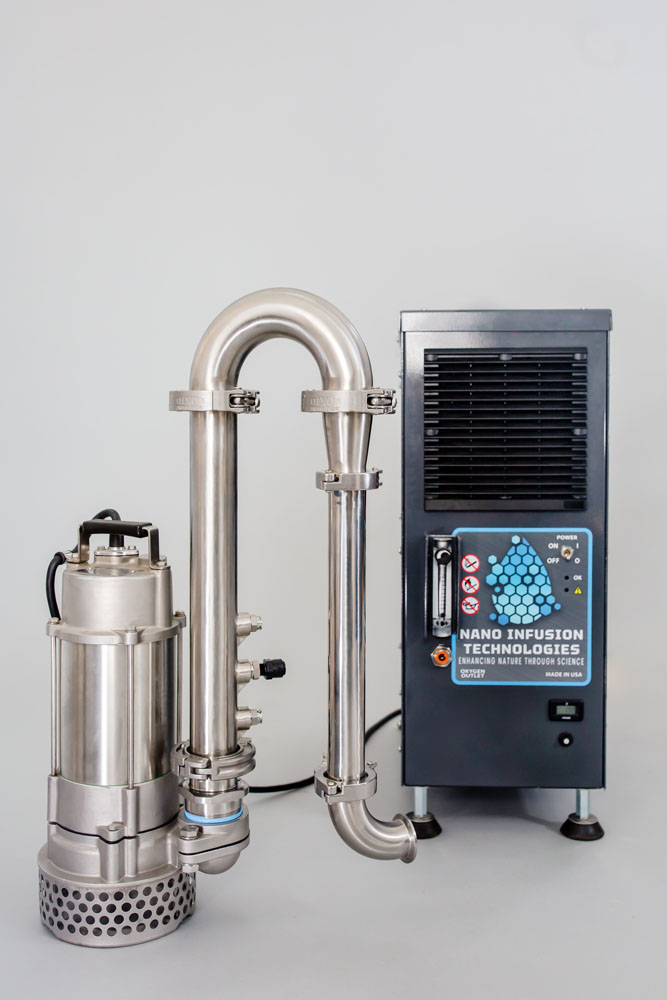
A nanobubble generator is a device that produces extremely small gas bubbles in a liquid, typically less than 200 nanometres in diameter (about 2,500 times smaller than a grain of salt).
These bubbles have unique physical and chemical properties compared to normal bubbles:
High stability: They can remain suspended in water for weeks without rising to the surface and bursting.
High surface area: Their tiny size gives them a large surface area-to-volume ratio, which enhances gas transfer efficiency.
Electrochemical activity: Nanobubbles carry a surface charge (zeta potential), preventing them from coalescing and giving them unusual reactivity.
Oxidative effects (when using gases like ozone or oxygen): Nanobubbles can generate reactive oxygen species, boosting disinfection and pollutant breakdown.


